
Last Updated on 13 June 2026 by Ella Okos, MD
Introduction: Why Sleep Becomes So Difficult During Menopause
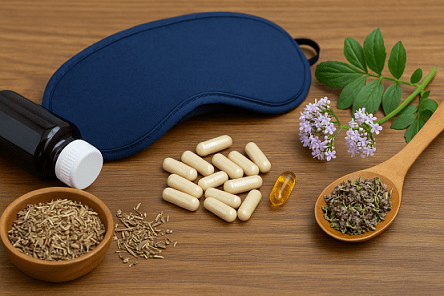
Finding the right natural sleep aids for menopause can make an enormous difference to your quality of life during this transition. Sleep problems are among the most common and most disruptive symptoms of menopause. Up to 60% of menopausal women report significant sleep disturbances — difficulty falling asleep, waking up multiple times during the night, early morning awakening, or simply never feeling rested.
Several factors contribute to this: declining estrogen and progesterone levels directly affect sleep architecture; hot flashes and night sweats cause frequent awakenings; rising anxiety and mood changes make it harder to wind down; and changes in melatonin production shift the body’s internal clock.
Pharmaceutical sleep aids can be effective short-term, but many women prefer natural alternatives that support the body’s own sleep mechanisms without the risk of dependence or morning grogginess. This guide covers the most evidence-based natural sleep supplements — what they do, which forms work best, how to use them safely, and what to watch out for.
1. GABA (Gamma-Aminobutyric Acid)
What It Does
GABA is the brain’s primary inhibitory neurotransmitter — it acts as a natural brake on nervous system activity. During menopause, declining estrogen reduces GABA receptor sensitivity. Some small studies suggest that low-dose natural GABA (75 mg) is specifically effective against sleep-onset insomnia.
- Promotes relaxation and reduces anxiety
- Helps quiet racing thoughts at bedtime
- May reduce the time it takes to fall asleep
- Supports deeper, more restorative sleep
- May reduce hot flash-related sleep disruption
Which Form to Choose
- PharmaGABA: naturally produced form — considered more bioavailable than synthetic GABA
- Standard GABA: widely available; debate exists about how much crosses the blood-brain barrier
- Combination products: often paired with L-theanine, magnesium, or passionflower
Suggested Dose
- 75–750 mg taken 30–60 minutes before bed
- Start with a lower dose (75–100 mg) — some studies show this is sufficient
Possible Side Effects
- Generally well tolerated at recommended doses
- Drowsiness — do not drive after taking
- Tingling or flushing sensation at higher doses (usually harmless)
- At very high doses: shortness of breath, increased heart rate — reduce dose immediately
Drug Interactions
- Sedatives, benzodiazepines: additive sedative effect — do not combine without medical advice
- Alcohol: additive sedative and depressant effect — avoid combining
👉 [BUTTON: Buy Supplement — PRETTY LINK: gaba]
2. L-Theanine
What It Does
L-theanine is an amino acid found naturally in green tea. It promotes calm alertness during the day and relaxed sleepiness at night — without causing drowsiness when taken in small doses.
- Increases alpha brain waves — associated with relaxed, calm alertness
- Reduces anxiety and mental tension without sedation
- Improves sleep quality and depth (not just onset)
- Works synergistically with GABA and magnesium
- Does not cause dependency or morning grogginess
Suggested Dose
- 100–400 mg before bed for sleep support
- 100–200 mg during the day for anxiety and focus
Possible Side Effects
- Exceptionally well tolerated — one of the safest supplements available
- Rarely: headache, nausea at very high doses
- May lower blood pressure slightly
Drug Interactions
- Blood pressure medications: additive blood pressure-lowering effect possible
- Sedatives: mild additive sedative effect at higher doses
👉 [BUTTON: Buy Supplement — PRETTY LINK: l-theanin]
3. Melatonin
What It Does
Melatonin is a hormone naturally produced by the pineal gland. Its production declines with age, and menopause further disrupts the body’s circadian rhythm. Some studies have reported improvements in postmenopausal women with pre-existing sleep impairment.
- Helps with difficulty falling asleep (sleep onset insomnia)
- Re-sets a disrupted sleep-wake cycle
- May have mild antioxidant and cardiovascular protective effects
Which Form to Choose
- Immediate-release: best for difficulty falling asleep — acts quickly
- Extended-release: better for staying asleep through the night
- Sublingual: fastest absorption — useful for acute sleep onset problems
Suggested Dose
- 0.5–3 mg taken 30–60 minutes before bed
- Lower doses (0.5–1 mg) are often as effective as higher doses with fewer side effects
Possible Side Effects
- Drowsiness the next morning — especially at doses above 3 mg
- Vivid dreams or nightmares, headache, dizziness, nausea
- May worsen depression in some individuals
Do not drive or operate machinery after taking melatonin.
Drug Interactions
- Sedatives and sleeping pills: additive sedative effect
- Blood thinners (warfarin): may enhance anticoagulant effect — monitor
- Antidepressants (especially fluvoxamine): significantly increases melatonin levels — avoid
👉 [BUTTON: Buy Supplement — PRETTY LINK: melatonin]
4. 5-HTP (5-Hydroxytryptophan)
What It Does
5-HTP is a precursor to serotonin and subsequently to melatonin. Some studies show it can improve sleep quality, with benefits more prominently observed in poor sleepers.
- Increases serotonin production — improves mood and reduces anxiety
- Supports melatonin production — improves sleep quality
- May reduce hot flash severity (serotonin plays a role in temperature regulation)
Suggested Dose
- 50–200 mg taken 30–60 minutes before bed; start at 50 mg and increase gradually
Possible Side Effects
- Nausea — most common side effect; take with food if needed
- Digestive upset, drowsiness, vivid dreams, headache
Do not use during pregnancy or breastfeeding.
Serious: combining 5-HTP with antidepressants (SSRIs, SNRIs, MAOIs) can cause serotonin syndrome. Seek immediate medical attention if you experience agitation, confusion, rapid heart rate, or muscle twitching.
Drug Interactions
- SSRIs, SNRIs, MAOIs: SERIOUS RISK of serotonin syndrome — do not combine
- Tramadol and opioids: increased risk of serotonin syndrome
👉 [BUTTON: Buy Supplement — PRETTY LINK: 5-Hydroxytryptophan]
5. Fennel + Valerian
What It Does
Clinical studies have shown that when combined, fennel and valerian proved effective for relieving sleep disorders as well as reducing the severity and frequency of hot flashes — particularly relevant for menopausal women.
- Valerian root: interacts with GABA receptors. Reduces anxiety and promotes relaxation. May reduce hot flashes and restlessness.
- Fennel: contains phytoestrogens that may ease hot flashes and night sweats.
- Reduces time to fall asleep and night awakenings
- May reduce hot flash frequency and severity
Suggested Dose
- Valerian alone: 300–600 mg of root extract, 30–60 minutes before bed
- Valerian may take 2–4 weeks to reach full effectiveness
Possible Side Effects
- Valerian: vivid dreams, headache, dizziness, morning drowsiness at high doses
- Valerian paradox: small number of people experience stimulating effects — try taking earlier
Avoid during pregnancy. Avoid if you have estrogen-sensitive conditions — consult your doctor.
Drug Interactions
- Sedatives, benzodiazepines: additive sedative effect — do not combine without medical advice
👉 [BUTTON: Buy Supplement — PRETTY LINK: fennel + valerian]
6. Chamomile
What It Does
Chamomile’s active compound apigenin binds to GABA receptors producing a mild calming effect. It may also ease mild anxiety and irritability during menopause — addressing both emotional and sleep aspects of the transition.
- Gently promotes relaxation and reduces anxiety and irritability
- Shortens time to fall asleep and reduces nighttime awakenings
- Soothes digestive discomfort
Which Form to Choose
- Extract (capsules): standardised, concentrated dose — more predictable than tea
- Tea: pleasant pre-bedtime ritual; still effective for mild sleep difficulties
Suggested Dose
- Extract: 250–500 mg 30–60 minutes before bed
- Tea: 1–2 cups 30–45 minutes before bed
Possible Side Effects
- Generally very safe and well tolerated
- Allergic reactions in people sensitive to the daisy family (ragweed, chrysanthemums)
If allergic to ragweed, use with caution. Avoid during pregnancy in medicinal doses.
Drug Interactions
- Blood thinners (warfarin): chamomile contains coumarin — may enhance anticoagulant effect
- Sedatives: mild additive sedative effect
👉 [BUTTON: Buy Supplement — PRETTY LINK: chamomile]
7. Hemp Oil (CBD)
What It Does
Hemp oil supports the endocannabinoid system — involved in sleep, mood, and stress regulation. According to some studies it may improve sleep in individuals with insomnia. It may also ease anxiety, pain, and inflammation — all of which can disrupt sleep during menopause.
- Supports the endocannabinoid system — sleep, mood, and stress regulation
- Anti-inflammatory properties — reduces physical discomfort disrupting sleep
- May reduce anxiety and promote general relaxation
Suggested Dose
- Follow product label — dosing varies significantly by product and concentration
- Start with the lowest recommended dose and increase gradually
- Take 30–60 minutes before bed
Possible Side Effects
- Generally well tolerated — mild digestive discomfort initially, drowsiness, dry mouth
Quality varies enormously — choose products with third-party lab testing (Certificate of Analysis).
Drug Interactions
- Blood thinners (warfarin): CBD inhibits liver enzymes — can significantly raise warfarin levels. Monitor INR closely.
- Liver-processed medications: check with your pharmacist if you take regular medications
- 👉 [BUTTON: Buy Supplement — PRETTY LINK: hemp oil CBD]
9. Lemon Balm (Melissa officinalis)
What It Does
Studies suggest benefits for insomnia and tension. Lemon balm inhibits the breakdown of GABA in the brain, making it more available and prolonging its calming effects.
- Reduces anxiety, nervous tension, and mood changes
- Promotes relaxation and improves sleep quality
- Supports cognitive function and reduces brain fog
Suggested Dose
- 300–600 mg of standardised extract 30–60 minutes before bed
- Often combined with valerian for enhanced sleep support
Possible Side Effects
- Generally very well tolerated — rarely nausea, dizziness, drowsiness
May affect thyroid function with long-term high-dose use — use cautiously if you have thyroid conditions.
Drug Interactions
- Sedatives, benzodiazepines: additive sedative effect
- Thyroid medications: lemon balm may reduce thyroid hormone activity — monitor
👉 [BUTTON: Buy Supplement — PRETTY LINK: lemon balm]
10. Lavender Capsules
What It Does
A systematic review and meta-analysis of 11 clinical studies confirmed that lavender essential oil improves sleep quality. Oral Silexan has been shown to be as effective as lorazepam for anxiety — without the risk of dependence.
- Reduces anxiety, restlessness, and nervous tension
- Improves sleep quality — particularly in anxiety-driven insomnia
- Reduces night awakenings, non-habit-forming
Which Form to Choose
- Oral lavender oil: standardised capsules
Suggested Dose
- 80 mg per day, taken in the evening
- Clinical effects typically appear within 2 weeks of regular use
Possible Side Effects
- Generally very well tolerated — burping with lavender taste (harmless), rarely nausea or headache
Drug Interactions
- Sedatives: potential additive sedative effect
- Blood pressure medications: mild additive blood pressure-lowering effect
👉 [BUTTON: Buy Supplement — PRETTY LINK: lavender capsules]
11. Passionflower (Passiflora incarnata)
What It Does
A 2024 study showed that passionflower improved sleep quality and provided sound sleep with lesser disturbance. It also improved mood, ability to work, concentration, and memory — particularly valuable for menopausal women dealing with both sleep and cognitive changes.
- Reduces anxiety and mental overactivity
- Promotes relaxation and reduces time to fall asleep
- Improves sleep quality, mood, concentration, and memory
- Non-habit-forming
Suggested Dose
- 250–500 mg of standardised extract 30–60 minutes before bed
- As tea: 1 cup of strong passionflower tea before bed
Possible Side Effects
- Generally well tolerated — drowsiness, dizziness at higher doses, nausea (rare)
Avoid during pregnancy. Avoid before surgery — may enhance effects of anaesthesia.
Drug Interactions
- Sedatives, benzodiazepines: significant additive sedative effect — do not combine without medical advice
- Blood thinners: mild anticoagulant properties
👉 [BUTTON: Buy Supplement — PRETTY LINK: passionflower]
Summary Table
| Supplement | Key Benefit | Best Form | Suggested Dose |
| GABA | Relaxation, falling asleep | PharmaGABA preferred | 75–750 mg before bed |
| L-Theanine | Calm alertness, sleep quality | Standard capsules | 100–400 mg before bed |
| Melatonin | Sleep onset, circadian rhythm | Immediate or extended release | 0.5–3 mg before bed |
| 5-HTP | Serotonin/melatonin, mood | Standard capsules | 50–200 mg before bed |
| Valerian | Relaxation, hot flashes, sleep | Standardised extract | Per product label |
| Chamomile | Gentle relaxation, anxiety | Extract or tea | 250–500 mg or 1–2 cups |
| Hemp Oil (oral) | Endocannabinoid, anti-inflam. | Full-spectrum preferred | Per product label |
| Lemon Balm | GABA support, anxiety, mood | Standardised extract | 300–600 mg before bed |
| Lavender Capsules | Anxiety-driven insomnia | Silexan 80mg preferred | 80 mg per day |
| Passionflower | Sleep quality, mood, memory | Standardised extract | 250–500 mg before bed |
Symptom and Side Effect Overview
| Remedy | Other Symptoms It May Help | Side Effects / May Worsen |
| Chamomile | Mild anxiety, irritability | Allergy in ragweed-sensitive women |
| Valerian | Nervous tension, restlessness | Fatigue or daytime drowsiness |
| Passionflower | Anxiety, mood, memory | Excess sedation with sleep aids |
| Lavender | Stress, mood changes | Headaches or skin sensitivity |
| Lemon Balm | Mood changes, anxiety | Drowsiness when combined with relaxants |
| Melatonin | Circadian rhythm problems | Morning grogginess; vivid dreams |
| L-Theanine | Stress reduction, calm focus | Headaches or nausea |
| GABA | Restlessness, anxiety relief | Daytime drowsiness |
| Hemp Oil / CBD | Anxiety, pain, inflammation | Grogginess; digestive discomfort |
| 5-HTP | Mood swings, low mood | Nausea; serotonin syndrome risk with antidepressants |
Building Your Personal Sleep Stack
- For difficulty falling asleep: L-theanine + Magnesium bisglycinate + Melatonin (0.5–1 mg)
- For anxiety-driven insomnia: L-theanine + GABA + Lavender capsules
- For hot flash-related awakenings: Fennel + Valerian + Magnesium
- For mood and sleep: 5-HTP + Lemon Balm (note: do NOT combine 5-HTP with antidepressants)
- For a gentle start: Chamomile tea + Passionflower + Glycine powder in a warm drink
FINAL WORDS
Whether you are just beginning to explore your options or refining an existing routine, the right natural sleep aids for menopause — combined with good sleep hygiene and appropriate medical support — can significantly improve your rest and overall wellbeing during this transition.
This article is for informational purposes only and does not constitute medical advice. Always consult a qualified healthcare professional before starting any supplement regimen.
Further Reading:
