
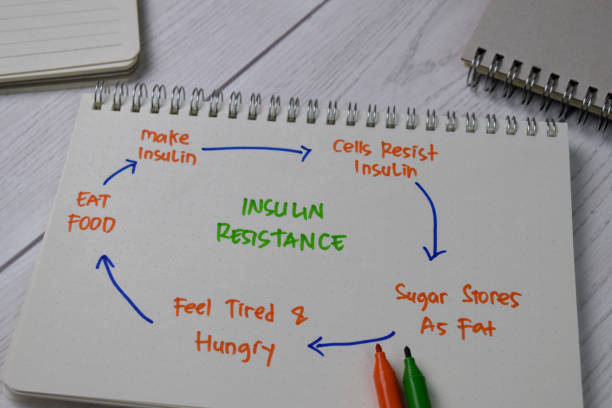
Last Updated on 26 June 2026 by Ella Okos, MD
Mind care insulin resistance strategies play a critical but often overlooked role in blood sugar regulation. Chronic stress, poor sleep, and nervous system overload directly worsen insulin resistance by increasing cortisol and disrupting metabolic balance.
In the earlier parts of this series, we explored how supplements, herbs, acupuncture, aromatherapy, and homeopathy can support insulin resistance from multiple angles. Now, in Part 4, you’ll learn practical mind–body tools—breathing exercises, gentle movement, meditation, and evening rituals—that calm the nervous system and support insulin sensitivity in as little as 15 minutes a day.
FRIENDLY REMINDER: This guide is educational. Always check with your clinician, especially if you have a medical condition, or take medication, notably antidiabetic (glucose-lowering) medicines, blood thinners, SSRIs, or antibiotics.
6) Mind–Body Care
Why Mind–Body Care Matters for Insulin Resistance
When stress becomes chronic—whether emotional, mental, or physical—your body releases more cortisol and adrenaline. These hormones are designed to protect you in short bursts. However, when they stay elevated for too long, they raise blood sugar and make your cells less responsive to insulin.
This state is often called “fight-or-flight overload.” In contrast, your body also has a calming system—the parasympathetic nervous system, or “rest-and-digest” mode. Mind–body practices help activate this calming pathway by improving vagal tone, which is your body’s natural brake pedal.
As vagal tone improves:
- heart rate variability increases (a sign of resilience),
- cortisol levels settle,
- digestion becomes smoother,
- sleep deepens,
- and insulin sensitivity improves.
In simple terms: a calmer body leads to better hormone balance and steadier metabolism.
The 15-Minute Daily Minimum
You don’t need long yoga classes or hour-long meditations. In fact, just 15 minutes a day, done consistently, can lower cortisol and improve blood sugar regulation over time.
Consistency matters more than duration. To make this easier, choose one of the following tracks—think of them as menus you can rotate depending on your mood, schedule, or energy level.
Track A: Breath + Body (Total ~15 minutes)
This track is ideal when you feel tense, wired, sluggish, or overstimulated. It combines breathing and gentle movement to calm your nervous system, improve circulation, and help your body use glucose more efficiently.
You can do this track in the morning, mid-afternoon, or in the evening—whenever stress or energy dips show up.
Step 1: Physiological Sighs (3 minutes)
Goal: Quickly release tension and lower cortisol.
This breathing pattern is something your body already does naturally during deep sleep or emotional release. Here, you’re using it on purpose to signal safety to your nervous system.
How to do it (very practically):
- Sit upright in a chair with your feet flat on the floor, or stand with your weight evenly distributed.
- Inhale through your nose normally.
- Without exhaling, take a short second inhale through the nose (like topping up the breath).
- Exhale slowly through your mouth, letting the air fall out like a sigh.
- Repeat this pattern continuously for 3 minutes.
Helpful tips:
- Keep your shoulders relaxed; avoid lifting them as you breathe.
- Let the exhale be longer than the inhale—this is what tells your body to calm down.
- If dizziness appears, slow the pace slightly.
Most people feel a noticeable drop in tension within the first minute. Your jaw may unclench, shoulders soften, and thoughts slow down. If you wear a smartwatch, you may even see your heart rate decrease.
Step 2: Gentle Yoga Flow (8 minutes)
This short sequence gently wakes up large muscles, improves circulation, and loosens areas that tighten under stress—especially the spine and hips. You should never feel strained or breathless.
Move slowly and breathe through your nose the entire time.
1. Cat–Cow (1 minute)
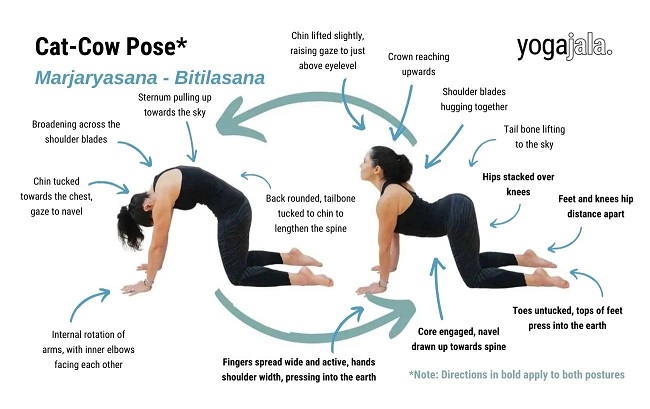
- Start on hands and knees.
- Inhale as you arch your back and lift your chest.
- Exhale as you round your spine and tuck your chin.
- Move slowly, matching breath to movement.
This motion gently massages your abdominal organs and stimulates the vagus nerve, supporting digestion and relaxation.
2. Low Lunge (2 minutes total)
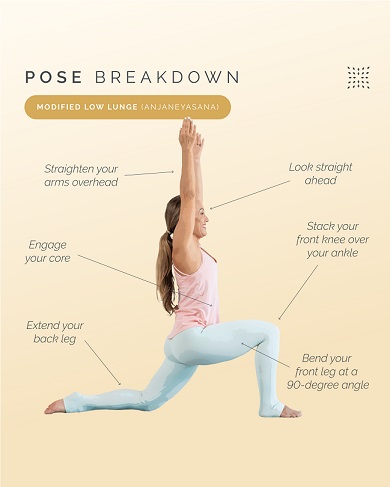
- From all fours, step your right foot forward between your hands.
- Sink gently into the hips without forcing the stretch.
- Keep your chest lifted and breathe deeply for one minute.
- Switch sides.
This pose releases hip flexors, which often tighten during chronic stress and long periods of sitting.
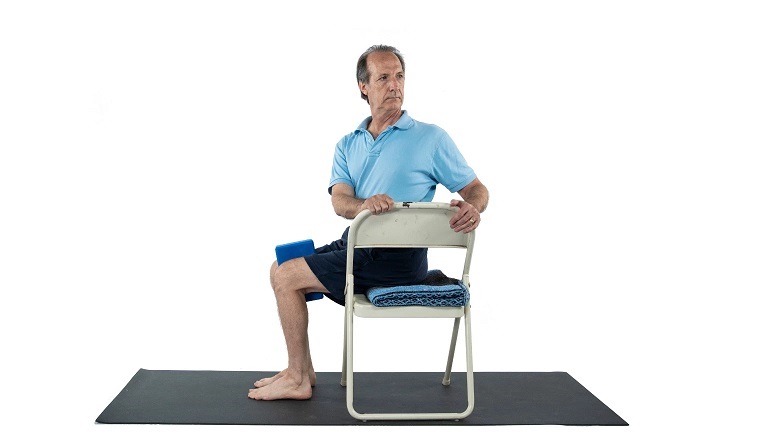
3. Seated Twist (2 minutes total)
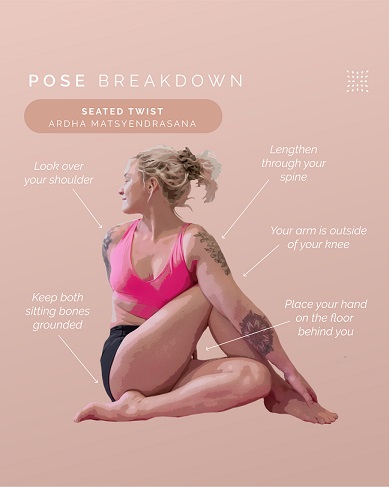
- Sit on the floor with your legs extended. If your lower back feels tight, sit on a folded blanket or cushion.
- Bend your right knee and place your right foot on the floor outside your left thigh. Keep your left leg straight or softly bent.
- Sit tall and inhale to lengthen your spine from tailbone to crown.
- Exhale and gently twist your torso toward the bent knee. Place your right hand behind you for support and bring your left arm across your body to hug the knee or rest the elbow outside it.
- Keep your chest lifted and shoulders relaxed. Let the twist come from your spine, not your neck.
- Hold for 5–10 slow breaths, inhaling to lengthen and exhaling to deepen slightly—without forcing.
- Inhale to unwind back to center, pause briefly, then repeat on the other side.
Helpful tips:
- Move slowly and stay within a comfortable range.
- Avoid pulling on the knee or forcing the twist.
- A chair version works well if sitting on the floor feels uncomfortable.
4. Bridge Pose (2–3 minutes)
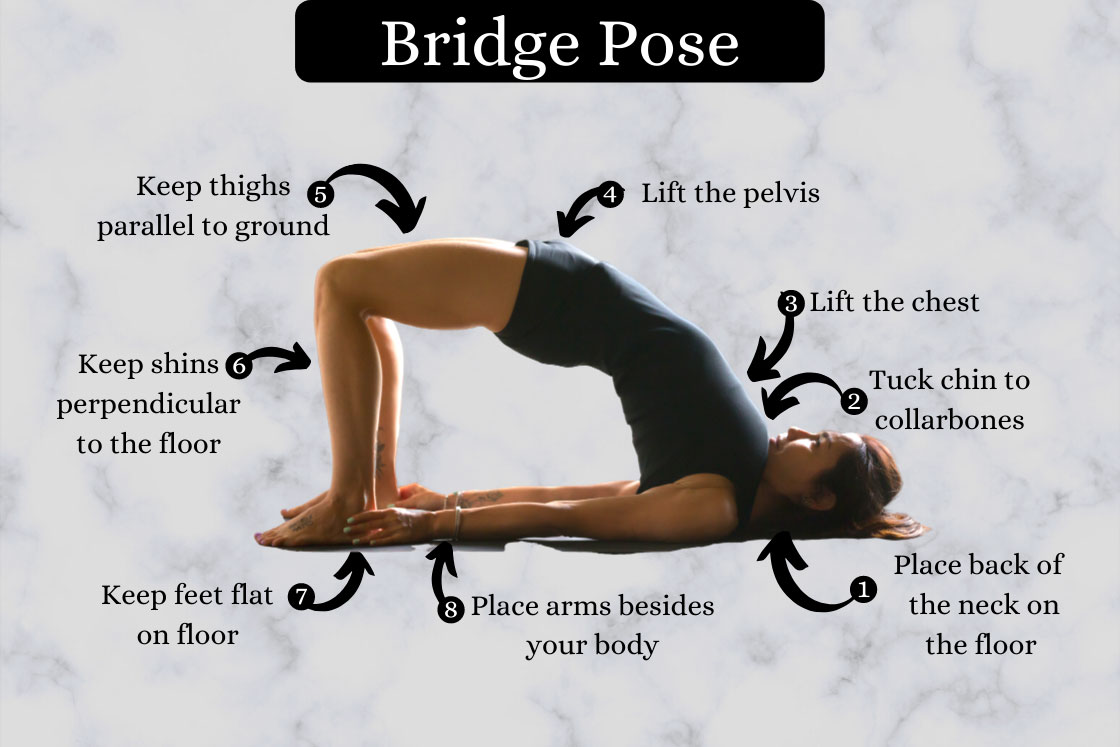
- Lie on your back with knees bent and feet flat on the floor, hip-width apart. Walk your heels in until you can lightly touch them with your fingertips.
- Rest your arms alongside your body, palms down. Relax your shoulders and keep your neck long.
- Inhale to prepare. As you exhale, press your feet into the floor and slowly lift your hips upward.
- Keep your knees pointing forward and your chest gently lifted. Avoid squeezing the glutes too hard.
- Hold for 5–10 slow breaths, breathing steadily through your nose.
- Exhale and slowly roll your spine back down to the floor, one vertebra at a time.
Helpful tips:
- Keep weight in your shoulders and feet, not your neck.
- Avoid turning your head while in the pose.
- For a gentler option, place a cushion or block under your hips for support.
Bridge Pose helps improve circulation, ease tension, and promote relaxation when paired with calm breathing.
Finish feeling: warm, relaxed, and steady—not tired or sore.
If you’d like to dive deeper into the world of yoga—especially into poses that are particularly beneficial during menopause—click here.
Step 3: Box Breathing (4 minutes)
Goal: Stabilize your nervous system and improve stress resilience.
This breathing technique creates a steady rhythm that trains your body to respond calmly under pressure.
How to do it:
- Inhale through your nose for 4 seconds.
- Hold for 4 seconds.
- Exhale slowly through your mouth for 4 seconds.
- Hold again for 4 seconds.
- Repeat for 4 minutes.
If holding feels uncomfortable, shorten the hold to 2 seconds. The rhythm matters more than perfection.
Over time, this practice lowers blood pressure, improves focus, and helps smooth blood sugar swings driven by stress.
Track B: Meditation + Walk (Total ~15 minutes)
This option works well if sitting still feels challenging or if you think more clearly while moving.
Step 1: Guided Mindfulness (10 minutes)
Goal: Help your brain pause before reacting to cravings or stress.
How to do it:
- Sit or lie down comfortably.
- Use a guided meditation app or video (search “body scan” or “urge surfing”).
- Notice sensations like tightness, warmth, or restlessness without judging them.
- When your mind wanders, gently return to your breath.
Ten minutes a day is enough to reduce emotional eating and improve insulin sensitivity over time.
Step 2: Short Outdoor Walk (5 minutes)
- Walk outside if possible.
- Keep your gaze forward, not on your phone.
- Breathe slowly through your nose.
- Feel each step connect with the ground.
This light movement helps muscles absorb glucose and anchors calm into your body.
Track C: Tai Chi / Qi Gong Mini-Set (Total ~15 minutes)
This track is especially helpful if you want gentle movement without joint strain.
Step 1: Ba Duan Jin (“Eight Brocades”) (12 minutes)
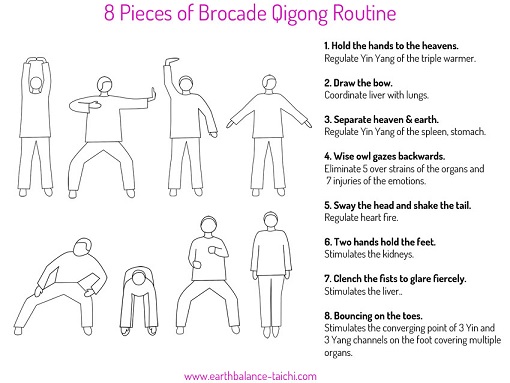
Ba Duan Jin, also known as the Eight Brocades, is a traditional Qi Gong sequence made up of eight gentle movements. Each movement combines slow motion, relaxed breathing, and focused attention. Together, they help calm the nervous system, reduce stress hormones, improve circulation, and support overall metabolic balance.
You don’t need special equipment, flexibility, or prior experience. Wear comfortable clothing and practice barefoot or in flat shoes if possible.
Before you begin
- Stand with your feet about hip-width apart.
- Soften your knees slightly (don’t lock them).
- Let your arms hang loosely by your sides.
- Take 2–3 slow breaths through your nose to settle in.
Move slowly throughout the sequence. If anything feels uncomfortable, reduce the range of motion.
1. Two Hands Lift the Sky
- Inhale slowly as you raise both arms forward and overhead, palms facing up.
- Gently stretch upward without lifting your shoulders.
- Exhale as you lower your arms back down.
- Repeat for 1–2 minutes.
Think of creating space between your ribs as you breathe.
2. Drawing the Bow to Shoot the Hawk
- Step your feet slightly wider.
- Inhale as you extend one arm forward and pull the other arm back as if drawing a bow.
- Look in the direction of the “arrow.”
- Exhale and return to center.
- Switch sides and repeat for 1–2 minutes.
Keep movements smooth, not forceful.
3. Separating Heaven and Earth
- Place one hand palm-up near your waist and the other palm-down near your chest.
- Inhale as you gently push the top hand upward and the bottom hand downward.
- Exhale as you return to center.
- Switch sides and repeat for 1–2 minutes.
Imagine lengthening your torso rather than pushing hard.
4. Wise Owl Gazes Backward
- Place your hands on your hips or let them hang freely.
- Slowly turn your head to look over one shoulder as you inhale.
- Exhale as you return to center.
- Repeat on the other side for 1–2 minutes.
Keep the movement gentle and pain-free.
5. Sway the Head and Shake the Tail
- Slightly bend your knees and hinge forward from the hips.
- Gently sway your torso side to side, letting arms hang loosely.
- Breathe naturally for 1–2 minutes.
This movement should feel fluid and relaxed.
6. Two Hands Hold the Feet to Strengthen the Kidneys
- Inhale as you raise your arms overhead.
- Exhale as you slowly fold forward, bending your knees as needed.
- Let your head and arms relax downward.
- Inhale to slowly roll back up.
- Repeat for 1–2 minutes.
Never force the stretch—comfort comes first.
7. Clench Fists and Glare Fiercely
- Stand tall with fists loosely clenched.
- Inhale as you draw one fist back near your waist.
- Exhale as you gently punch forward at chest height.
- Alternate sides for 1–2 minutes.
Keep movements controlled and calm, not aggressive.
8. Bouncing on the Toes
- Rise gently onto the balls of your feet as you inhale.
- Lower your heels softly as you exhale.
- Repeat lightly for 1–2 minutes.
The bounce should feel easy and springy, not jarring.
After the sequence
- Stand quietly for a few breaths.
- Notice warmth, calm, or a gentle sense of energy flow.
Practicing Ba Duan Jin regularly—even a few times per week—can help reduce chronic stress, improve balance and coordination, and support insulin sensitivity by calming the nervous system.
Over time, this sequence lowers stress hormones and supports insulin sensitivity.
Step 2: Coherent Breathing (3 minutes)
- Inhale through your nose for 5 seconds.
- Exhale softly for 5 seconds.
- Continue smoothly for 3 minutes.
This breathing pattern improves heart rate variability, a key marker of nervous system resilience.
Which Mind–Body Track Fits You Best? – QUIZ
Everyone’s nervous system responds to stress a little differently. This quick quiz helps you choose the mind–body track that best matches your personality, energy level, and daily challenges.
Choose the answer that feels most true for you. There are no right or wrong answers.
1. When stress hits, your body usually feels…
A. Tight, restless, or “wired,” especially in your shoulders or jaw
B. Mentally overwhelmed, stuck in your thoughts
C. Heavy, stiff, or achy, especially in joints or hips
2. By mid-afternoon, you’re most likely to feel…
A. Anxious, tense, or irritable
B. Mentally foggy or craving sugar for energy
C. Physically tired but calm, with low motivation to move
3. Sitting still for 10 minutes feels…
A. Difficult—I feel better when I move or stretch
B. Okay, especially if I’m guided
C. Fine, as long as it’s gentle and slow
4. Your biggest challenge with stress is…
A. Turning off tension in your body
B. Quieting your mind and emotional eating
C. Rebuilding energy without overdoing it
5. Your ideal evening routine would be…
A. Stretching and breathing to release the day
B. A calming meditation followed by a short walk
C. Slow, flowing movements that feel soothing
6. Movement feels best when it’s…
A. Grounding and structured
B. Light and flexible
C. Slow, rhythmic, and flowing
7. Right now, your nervous system feels…
A. Overstimulated and stressed
B. Mentally overloaded
C. Depleted and low on energy
Scoring Your Results
Count how many times you chose A, B, or C.
HOW TO CHOOSE TRACK that fits you best
Mostly A’s → Track A: Breath + Body
You respond best to structured breathing and gentle movement. Your nervous system benefits from clear steps and physical grounding.
Why this works for you:
- Quickly lowers cortisol
- Releases stored tension
- Improves circulation and glucose uptake
Best time of day: Morning, mid-afternoon, or evening wind-down
Mostly B’s → Track B: Meditation + Walk
Your stress lives more in your thoughts and emotions. Mindfulness helps you pause before reacting to cravings or stress.
Why this works for you:
- Reduces emotional eating
- Improves insulin sensitivity
- Helps you reset mentally
Best time of day: Late afternoon or early evening
Mostly C’s → Track C: Tai Chi / Qi Gong
You thrive with slow, flowing movement that restores energy without strain.
Why this works for you:
- Builds strength gently
- Improves balance and coordination
- Lowers stress hormones over time
Best time of day: Morning or early evening
Mixed Results? That’s Normal
If your answers were evenly split, feel free to rotate tracks during the week:
- Track A on busy days
- Track B when cravings feel strong
- Track C when energy feels low
Your nervous system changes—your practice can too.
Final Tip
Consistency matters more than perfection. Choose one track today, stick with it for a week, and notice how your energy, cravings, sleep, and blood sugar stability respond.
Sleep Anchors: Finishing Your Day Right
Evening rituals stabilize circadian rhythms and improve insulin function overnight. Poor sleep alone can trigger insulin resistance within days—so this part matters.
Core habits:
- Fixed wake time: Wake up at the same time every day, even on weekends. This trains your internal clock.
- Dim lights 2 hours before bed: Use warm lighting or candles; avoid bright overheads.
- No screens 60 minutes before bed: Blue light suppresses melatonin.
- Cool, dark room: Ideal bedroom temperature is 18–20°C (64–68°F).
- Magnesium (optional): Take 200–400 mg 1–2 hours before bed. It promotes calm and supports insulin function overnight.
You’ll fall asleep faster, sleep more deeply, and wake up with steadier blood sugar.
Conclusion – What’s Next (Part 5)
Mind–body care completes a crucial layer of insulin-resistance support. By calming your nervous system, improving sleep, and reducing stress hormones, these practices help everything else work better—from nutrition and supplements to movement and metabolism.
In Part 5 of this series, we’ll bring everything together in The Ultimate Natural Guide to Insulin Resistance – Part 5 of 5: Putting It Together. You’ll learn how to combine lifestyle habits, natural therapies, and mind–body tools into a realistic, sustainable plan that fits your daily life.
