
Last Updated on 24 June 2026 by Ella Okos, MD
Introduction: Understanding the Three Stages of the Menopause Journey (also called Climacteric)
The three stages of the menopause journey describe a natural biological process that every woman experiences differently.
Rather than happening overnight, this process unfolds gradually over several years and brings hormonal, physical, and emotional changes along the way.
Understanding what happens during the three stages of the menopause journey can reduce uncertainty and help you recognise what your body is going through — and why.
In this article, we’ll clearly explain:
-
the three stages of menopause journey
-
their typical symptoms
-
and how long each stage usually lasts
What Are the Three Stages of the Menopause Journey?
The menopause journey is often called the climacteric period.
It consists of three distinct but connected phases:
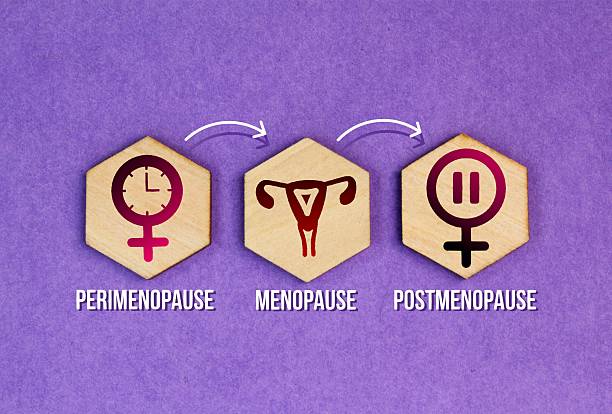
1. Perimenopause – the transition phase
2. Menopause – the milestone diagnosis
3. Postmenopause – life after menopause
Each stage has its own hormonal patterns and symptom profile.
Stage 1: Perimenopause – The Transitional Phase
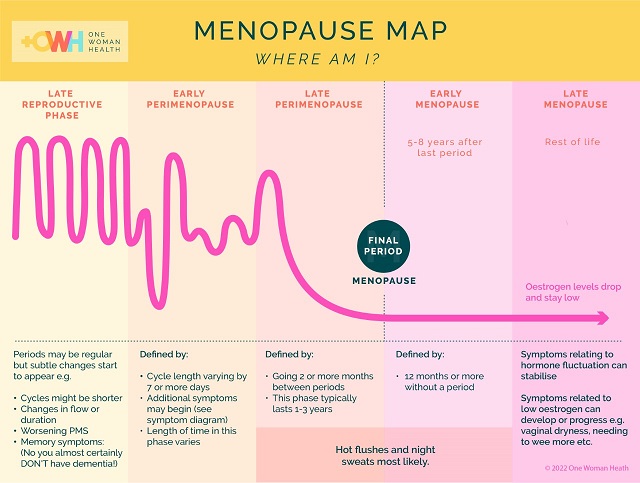
Perimenopause is the earliest, and usually the longest and most confusing stage of the menopausal transition. Hormonal changes begin gradually, long before menopause is officially reached.
For many women, the first hormonal changes appear subtly, and these early signs of menopause are often overlooked or mistaken for stress or ageing.
When does perimenopause start?
Perimenopause commonly begins in a woman’s 40s, but for some, it can start earlier. This stage may last anywhere from 4 to 10 years, and symptoms can fluctuate significantly over time.
What happens during perimenopause?
During perimenopause, the ovaries start producing less oestrogen. Periods often continue, but they may become irregular, unpredictable, or heavier or lighter than before. These hormonal shifts affect not only the reproductive system but also temperature regulation, mood, and energy levels.
This gradual shift has a specific biological cause. Every woman is born with a finite number of follicles — the tiny sacs within the ovaries that hold eggs. As this supply diminishes over time, a process known as follicular depletion, the ovaries become less responsive to hormonal signals from the brain. The hypothalamus, which acts as the body’s hormonal control centre, continuously sends signals to the ovaries to produce oestrogen and progesterone. As the ovaries’ capacity to respond decreases, this communication becomes increasingly unpredictable — and it is this instability, rather than a simple decline, that drives many of the early symptoms women experience during perimenopause.
Common perimenopause symptoms
Many women experience a combination of physical and emotional symptoms during this stage, which may vary in intensity over time. Common changes include:
- irregular menstrual cycles
- mood swings, anxiety, or irritability
- changes in energy levels and mental focus
- vaginal dryness or discomfort
- increased sensitivity to temperature
Among the most common symptoms during this stage are hot flashes and night sweats, which can significantly affect daily comfort and quality of life. Hormonal fluctuations and night-time symptoms often contribute to sleep problems during menopause, even before periods stop completely.
Because symptoms appear while periods are still present, perimenopause is often mistaken for stress or burnout. Distinguishing perimenopause from stress or burnout is not always straightforward. Stress can certainly disrupt the menstrual cycle, but perimenopause tends to introduce symptoms that stress alone does not cause — particularly night sweats, hot flashes, and a consistent shortening or lengthening of the cycle over several months. Keeping a simple symptom diary for six to eight weeks can be a practical first step, both for personal clarity and to provide useful information when speaking with a GP.
For a deeper dive into the specific phases of perimenopause, read our comprehensive guide to the stages of perimenopause.
Stage 2: Menopause – The Defining Point
Within the menopause journey, menopause itself is not a long phase, but a clearly defined moment.
When is menopause officially diagnosed?
A woman is considered menopausal after 12 consecutive months without a menstrual period.
The average age is around 51, although menopause can occur anywhere between 40 and 58.
It is worth noting that the twelve-month count must be uninterrupted. Even a small amount of spotting resets the count to zero, which is why the diagnosis is always made retrospectively. Any vaginal bleeding that occurs after the twelve-month milestone has been confirmed should be discussed with a healthcare professional, as it is no longer considered part of the normal transition.
Hormonal changes during menopause
At this point:
- ovulation stops,
- oestrogen and progesterone levels drop significantly, and
- fertility ends permanently.
A helpful way to understand why this happens is to think of it as a “communication gap” between your brain and your ovaries. Throughout the transition, your brain continues to send hormonal signals to trigger ovulation, but your ovaries gradually become less responsive. In reply, your brain sends even stronger signals — in the form of elevated FSH (follicle-stimulating hormone) — but the response remains inconsistent. This back-and-forth is what creates the hormonal unpredictability so many women experience, until eventually the conversation quietens altogether and menopause is reached.
Common menopause symptoms
Symptoms often continue from perimenopause and may include:
-
persistent hot flashes and night sweats
-
vaginal dryness and discomfort
-
reduced libido
-
mood changes or emotional sensitivity
-
memory issues or “brain fog”
While menopause marks an important milestone, symptoms often extend beyond this point.
Stage 3: Postmenopause – Life After Menopause
Postmenopause begins once menopause has been reached and lasts for the rest of life.
What changes during postmenopause?
Hormone levels remain consistently low, and the ovaries no longer release eggs.
For many women, vasomotor symptoms gradually ease, although some may persist.
Common postmenopause symptoms
- ongoing vaginal dryness
- occasional hot flashes
- urinary tract changes
- skin and hair dryness
- changes in metabolism
Long-term health considerations
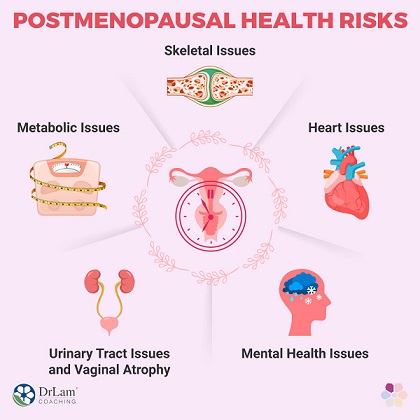
Lower oestrogen levels can increase the risk of certain conditions, such as:
- osteoporosis and bone fractures
- cardiovascular disease
- changes in weight distribution
It is worth understanding why these risks increase. Oestrogen plays an active protective role in both cardiovascular health and bone density throughout your reproductive years. It helps keep blood vessels flexible and supports the constant process of bone renewal. As oestrogen levels drop permanently in postmenopause, both systems lose this natural protection — which is why regular health check-ups, weight-bearing exercise, and calcium-rich nutrition become especially important from this stage onwards.
Regular health check-ups and supportive lifestyle habits become especially important in this stage.
How Long Do the Three Stages of the Menopause Journey Last?
| Stage | Typical Duration |
|---|---|
| Perimenopause | 4–10 years |
| Menopause | A single diagnostic point |
| Postmenopause | Lifelong |
Although timelines vary, understanding the three stages of the menopause journey helps normalise symptoms and set realistic expectations.
Managing Symptoms Across the Three Stages of the Menopause Journey
Although the menopause journey is a natural life process, its symptoms can affect daily comfort and overall well-being. The good news is that support options are available at every stage. Many women find that lifestyle adjustments and natural relief options for (peri)menopausal symptoms can significantly improve comfort across all three stages.
Helpful strategies may include:
-
balanced nutrition tailored to midlife needs
-
gentle, regular physical activity
-
stress management and emotional support
-
sleep-friendly daily routines
-
medical or complementary therapies when appropriate
Early awareness allows women to recognise changes sooner and seek appropriate support, rather than feeling the need to “push through” ongoing discomfort.
Managing Symptoms Across the Three Stages of the Menopause Journey
Although the menopause journey is a natural life process, its symptoms can affect daily comfort and overall well-being. The good news is that support options are available at every stage. Many women find that lifestyle adjustments and natural relief options for (peri)menopuasal symptoms can significantly improve comfort across all three stages.
Helpful strategies may include:
-
balanced nutrition tailored to midlife needs
-
regular physical activity
-
stress management and emotional support
-
sleep-friendly daily routines
-
medical or complementary therapies when appropriate
Early awareness allows women to recognise changes sooner and seek appropriate support, rather than feeling the need to “push through” ongoing discomfort.
FAQ – The Three Stages of the Menopause Journey
How do I know which stage of the menopause journey I’m in?
Changes in cycle regularity, symptom patterns, and eventually the absence of periods help determine the stage.
Can symptoms start before periods stop?
Yes. Most symptoms begin during perimenopause, often years before menopause.
Do menopause related symptoms ever fully stop?
For many women, symptoms ease over time, especially in postmenopause, but experiences vary.
Is the menopause journey the same for everyone?
No. Genetics, lifestyle, stress, and overall health all influence how you experience your menopause journey.
Conclusion
The three stages of the menopause journey represent a natural life process rather than a medical problem.
With clear information, supportive care, and early recognition of symptoms, women can move through each stage with greater confidence and comfort.
Understanding what is happening — and why — is the first step toward feeling more in control during the menopause journey.
